Showing posts with label Real stories Crohns. Show all posts

Monday, 28 April 2014

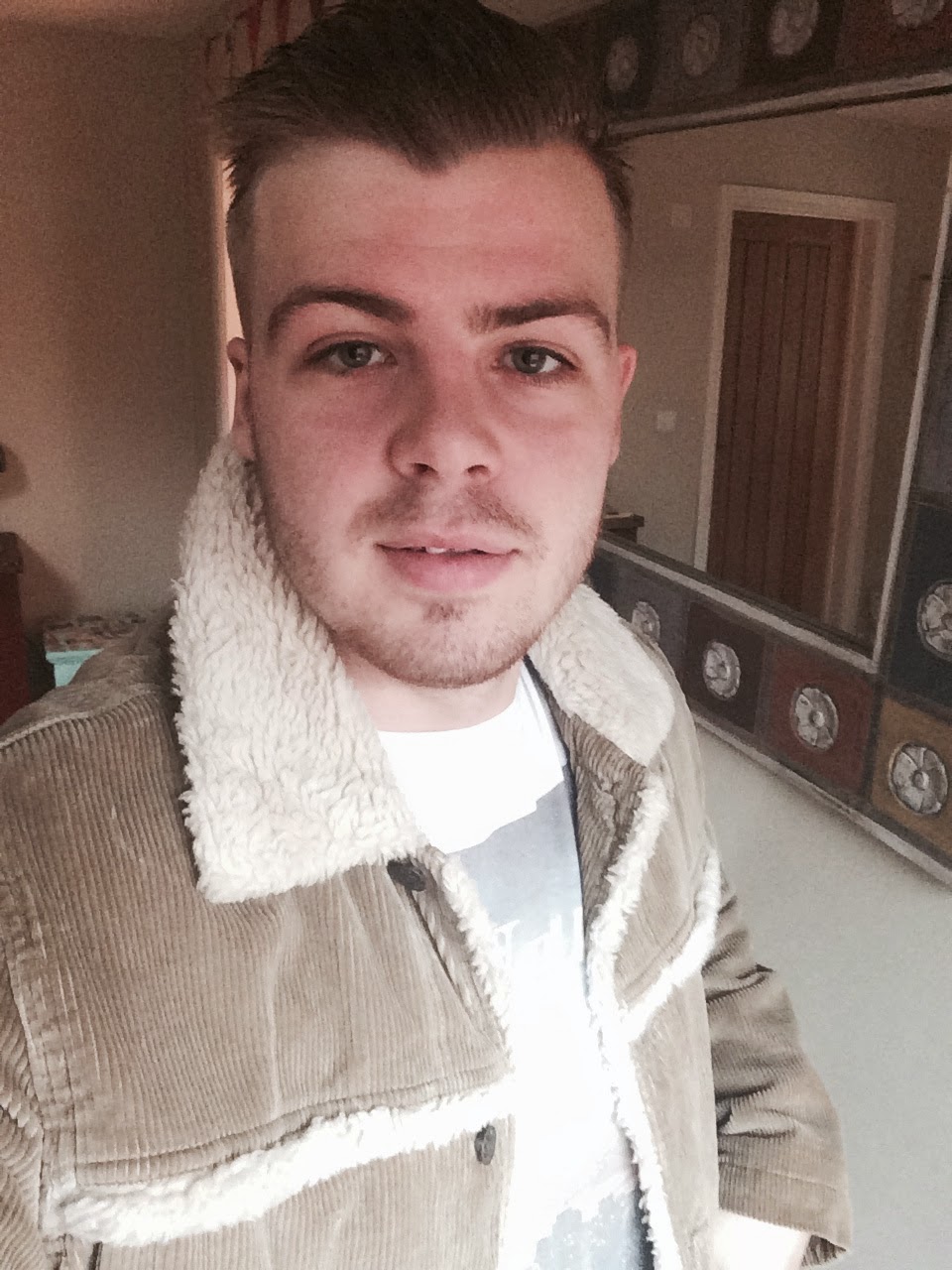
Guest Writer - Joey

It's been almost 6 years since I was diagnosed with Crohn's Disease. I vividly remember the first time I started to feel a dull ache every now and again from a part of my body you never want to feel pain - you guessed it, the anal region. I wasn't too concerned at first as I thought it may just be part of growing up, but I guess I was naive. 


At the age of 16, everyone thinks that they are invincible when they are that young. It was probably weeks maybe even months before I actually plucked up the courage to tell my parents about it, as you would have guessed I was very embarrassed, I hadn't even said anything to my closest friends but the pain was becoming quite unbearable and it just wasn't going away. I knew I had to do something.

The doctors were originally very vague in telling me what was actually wrong with me and couldn't actually give me a definite answer on any of the questions I had, which I would later find out was one of the major factors in why it would get so severe. Had they been able to diagnose it sooner I don't believe my condition would have got as bad as it did.


After making numerous visits to my GP they came to the conclusion that it was an ingrowing hair which had caused an infection. Boy, could they be any more wrong? As you can imagine stress levels were high. At this period in my life I was in the middle of my GCSE's and I would later find out that one of the main triggers of Crohn's is stress. Things were getting worse and I still did not know why. Coming away from the doctors surgery very unhappy and dissatisfied with their diagnosis me and my parents discussed that the only other option would be to make an appointment at the Gastroenterology department in Hereford Hospital as the pain was starting to get rapidly a lot more difficult to deal with. 


It was soon after this that eating was starting to become a real issue for me as I just stopped. I couldn't even explain why I just felt full all the time and couldn't even stomach my mums Sunday dinners which showed just how serious the problem was who can refuse their own mums Sunday dinners! It was at this point that my closest friends at school were starting to see a real change in my character as well as my physical appearance, as most people know I've always been quite a stocky lad and my weight was dropping at an alarming rate down to nearly under 9 stone. This was increasingly frustrating for me as I wanted to let my friends and classmates know what was happening but I didn't even know myself. But I was about to find out.

Of course I was extremely nervous on the morning of my hospital appointment what young lad wouldn't be? But I was in such pain that I just wanted a resolution to the problem. The consultant examined me and deemed everything okay for a small routine operation to remove some infected skin which I was told would be the end of my problem. It was only then that I happened to mention that the pain was coming from a different area also (a smaller lump that had appeared) . On re examination the consultant then looked at both me and my mum and told us he had made a mistake. We looked at each other directly in the eyes thinking exactly the same thing, Cancer. To my relief he immediately quashed this fear but he did diagnose a serious chronic condition that we knew nothing about. This was the first time I had ever heard of Crohn's Disease.


The operation still went ahead but they decided to use a camera to try and investigate the extent of the inflammation. I would later find out that this was inconclusive and they didn't actually find out anything they didn't already know. Things accelerated so rapidly after this as what I didn't know was an abscess was forming. At this point I was only really attending school to sit my actual GCSE's and I would like to thank Fairfield High School for the understanding they showed allowing me to take comfy cushions into my exams as well as jelly babies and other sweets to keep my energy levels high as the extreme fatigue caused by the condition was something I had never experienced before. 

In the days after the exams things really started to take a turn for the worse as the abscess was about to burst. The pain at this point was so severe that I remember saying to my mum I wanted to punch a brick wall so hard that at least it would change the focus of pain even for a couple of seconds. I was so angry with it I couldn't think or do anything else. I was admitted to hospital immediately and put straight onto morphine to try and control the pain and after a few days an operation was finally carried out. It wasn't until I had awaken from the surgery that I knew the extent of what was needed to relieve my symptoms. 

The operation left me with an open wound that would require packing and dressing every
day for many weeks. The nurses at this point tried to show my mum how to dress this for me but after taking one look at the damage that they had left she fainted right there in the hospital ward and needed oxygen herself!.It's safe to say she wasn't fit to do this and the job was left to district nurses and this was one of the worst experiences of my life. Imagine at the age of 16 having to have nurses intrusively everyday looking at the most private areas of body, especially when they were young and good looking!


Due to the inflammation in my bowel, an abnormal passageway had been caused. This was otherwise known as an anal fistula. This is essentially a small channel that develops between the end of the bowel, known as the anal canal or back passage and the skin near the anus, where obviously waste leaves the body. My problem was that the fistula was branching out into more than one channel. There was only one way to stop this and this was to insert a number of small drains into the passageways to help divert the waste and stop the build up. This would prevent another possible abscess. 

These drains were to stay with me for around 9 months and I have never told anyone this but I had to use pads walking around to collect any lets say..unexpected gifts. Having placed me on steroids the combination of them and the drains, finally got the condition under some control. This was never a permanent situation and whenever they tried to reduce the dosage of steroids, I would see myself falling ill again. This would happen over and over for a good 12-18 months. There was no real way to get the Crohn's under control. At my worst I was taking almost 100 different tablets a week. 


The most frustrating thing for me and my family was just nothing worked. Any time there was a bit of hope the Crohn's would flare up again. I tried to live as normal a life as possible. At this point, I was enrolled in Hereford Sixth Form College and was trying to get on with my education, but obviously I was incredibly embarrassed by my condition and only a select few of my closest friends knew what I was dealing with right through Sixth Form. They know who they are, and I thank them. Eventually after 3 years of unsuccessful treatment, I was trialled on a brand new, very expensive drug called Infliximab. 

Since August 2010, I have been regularly attending the hospital every 8 weeks. I have this drug administered through an intravenous drip. This combined with a daily drug called Azathioprine and regular blood tests has allowed me to steadily gain weight again, eat what I like and generally stay fairly healthy. I still suffer from the fatigue and some other minor issues but at least for the moment my quality of life has much improved. I have been told that the Infliximab is incredibly strong and nobody knows the real long-time side effects, so it is not an option to stay on this permanently. 


I really don't know what the future holds for my disease, and I hope that when I am no longer able to take this drug that there is something new for me take instead as I do not want to go back to the way I was almost 6 years ago. Although this could happen, I just try not to think about it. Despite the severity of this condition, and I admit at times it has got me really down and  quite depressed. I try to be as positive about it as possible. 

It hasn't stopped me in life as I am in the last few months of a business and management degree at Cardiff Metropolitan University, something I could never see myself doing a few years ago. It goes without saying I appreciate the support and understanding of my parents and friends about my condition but I would like to say a huge thank you to my sister Katie as she has written a few pieces as well as a radio appeal on Crohn's Disease and is extremely understanding and supportive of my condition.  


Crohn's disease is a very debilitating and embarrassing disease to live with. I have never spoken about what I have gone through before as to be honest, I never really knew the true meaning and just tried to ignore it. As there is currently no cure for the disease, I am purely writing this to help raise awareness in the hope that there can one day be a cure to stop people going through what I have and what the thousands of other people in the UK are going through- many who have had it a lot worse than me. 


Thanks for reading,
Joey


You can follow Joey's story at his blog: My Crohn's Disease


Tuesday, 10 December 2013

Personal Voices

Personal voicesEvery patient's experience of Crohn's and Colitis is different. Our website and booklet tells the story of just some of the UK's 240,000 children, teenagers and adults who have the conditions.
Read about their personal experiences below or download our Personal voices booklet (PDF).
Catherine's story
Catherine's story
Derek’s mum Catherine was diagnosed with Crohn’s at the age of 16 and, although she defied medical advice to have two children, she was almost always frail.
Chris's story
Chris's story
Chris was diagnosed with Crohn’s in 1983. Since then he has undergone surgery eight times and had numerous other stays in hospital.
Jennifer's story
Jennifer's story
It took 18 months of pain, sickness, bleeding, exhaustion and dramatic weight loss for 22 year-old Jennifer to be diagnosed with Crohn’s despite three visits to Accident and Emergency and even more visits to her GP.
Philip's story
Philip's story
Philip was a happy little soul from the moment he was born, and being diagnosed with Colitis at the age of 16 did nothing to change this.
Rob's story
Rob's story
There were two reasons why Rob’s experience of Crohn’s came as a shock to him.
Robyn's story
Robyn's story
Robyn was only 8 years old when she was diagnosed with Colitis, becoming the third generation in her family to have the condition.
Ruth's story
Ruth's story
As a working wife and mum of two, Ruth battled through periods of sickness and stomach pain for several years before being diagnosed with Crohn’s.
Sarah's story
Sarah's story
“I felt very alone,” Sarah says, remembering her first two years of illness. “No one understood what I was going through.”
Sonya's story
Sonya's story
Diagnosed with both Crohn’s and Colitis, Sonya’s experience has included multiple surgeries, more than 90 general anaesthetics, 37 blood transfusions, long periods of up to a year when her only food has come intravenously.

Tuesday, 17 September 2013

Guest Writer Helen

I was diagnosed with Crohn's disease when I was 16 years old after developing severe stomach cramps and fatigue. I was very quickly offered surgery to remove the affected part of my bowel. I dropped out of college a year early as my absences were mounting up and my tutor could not understand my illness, as to her I was not visibly ill. The operation was a miracle. I soon slipped straight back into my teenage life with no consideration to what I had just been diagnosed with. 

For the next three years I turned a blind eye to my condition as the operation had left me symptom free. I began volunteering at a special needs school and soon developed my passion for working with people with learning disabilities. I began my training at Northumbria University as a Learning Disability Nurse in 2010 and everything began to fit into place. 

In September 2012 I began slowly losing weight. I love to go to the gym and be as active as I can, so I put my weight loss down to this. Over the next two month I started to develop other Crohn’s related symptoms however I put these off and tried to make other excuses for it. I knew there was a possibility my Crohn’s had returned however I thought that if I didn’t face it then things would somehow sort themselves out. Unfortunately this was not the case.

In March 2013 I came home from University extremely unwell hoping to get a quick answer from my doctor. By this time I had lost 2 stone, I was unable to get out of bed, my appetite was nonexistent, I wasn't sleeping due to horrendous stomach cramps and I had developed an anal fissure that left me in excruciating pain every time I went to the toilet (which was a lot.)
I went to see my GP and he referred me to an IBD consultant. Due to me being so unwell the consultant didn’t want to do any investigations until I had picked up. I was put on to steroids, vital milkshakes, a no fibre diet and a combination of vitamin boosting drugs.

For the next month I was very unwell, I seemed to get worse before I started to feel better. This left me feeling very down in the dumps. I’d left my university life that I loved! I’d moved away from my friends and my boyfriend and to top it all off I missed starting my final placement as a student nurse.  I was missing out on so much at university. It was a very difficult time for me, my weight had dropped to 7 stone, and none of my clothes fit me anymore. I felt so insecure.


My friends and boyfriend had never seen me suffer from my Crohn’s before so didn’t understand what was going on. I was getting constant texts and messages asking when I was coming back, which I was unable to give an answer to. It was difficult to explain to people I will be better when I’m better, I didn’t know when it would be or how long it would take but being bugged daily by everyone wasn’t helping. My relationships with my friends and boyfriend were going downhill and I was becoming more and more fed up of being ill. (I’m a rubbish patient.)  


After a month of steroids the consultant decided my symptoms had settled enough for him to do tests. For the next couple of weeks I underwent surgery to remove an abscess I had developed, I was poked, prodded and scanned until it was apparent my Crohn's disease had returned "all guns blazing."
Following my results I was put straight on to Azathioprine tablets daily and Infliximab infusions every couple of weeks.
The infusions seemed too good to be true, my stomach cramps were a lot better. It was still a couple of weeks before I started to feel slightly ‘normal’ again. 

On the 3rd of May 2013 I moved back up to Newcastle. University and my Placement were very understanding. I was able to start my placement, just doing short shifts to get me back into a routine. I received financial support from University as initially I was travelling backwards and forwards between home and Newcastle to have my weekly blood tests and other treatments.
My first week back in Newcastle was terrible, I missed home so much. I cried my eyes out leaving my mum; she had been amazing, looking after me. She made sure I took my tablets, made my meals for me, took me to all my appointments and most importantly she understood! It was so hard remembering to take my tablets every day and having to explain to people why I couldn’t eat certain foods and why I had been so poorly. I just felt like no one understood.
 
Four months down the line I’m still learning about my Crohn’s, there’s so much to remember and come to terms with. I’ve learnt that if you don’t let people in and help them understand about Crohn’s disease then it’s a lonely road. Life is so much easier now my boyfriend, friends and colleagues have an insight to my illness.

My treatments have been amazing so far, I am back on a normal diet and not suffering from any symptoms. The only thing I struggle with is tiredness. I seem to be forever tired. I put this down to my determination to live a “normal” life. I do 13 hour shifts; go to the gym 4 times a week and I am as active as I can be. My friends understand that some days I just need to chill out and my boyfriend has come to terms with the fact it’s very unlikely I will watch a film without falling asleep half way through. It does worry me at times what the future may hold for my Crohn’s Disease, but I am confident that whatever comes my way I have the support of my family, boyfriend and friends to deal with it. I am determined that Crohn’s will not stop me living my life and following my dreams. 


Thursday, 5 September 2013

Quotes from People with IBD in Employment

To mark the release of the IBD in Young People: The Impact on Education and Employment. We've collated some of the responses from the 2011 IBD and Employment survey. This is what real people say about work. It's the good, the bad and the ugly, but these are all situations that you could encounter in the world of work. How would you handle the awkward or difficult moments that are mentioned?


“I think they need to understand the 
unpredictability of it as well. I was 
asked a lot of questions at interview 
like, how often do you flare-up?
How long do they last? How does it 
affect you? I just have to say I can’t 
tell you because I don’t know…”


“I feel that as a result of my illness 
I work harder and generally take 
fewer sick days than those around 
me who are of average or good 
health.”


“I think it is important to explain to 
your employer about your condition. 
Being open and up- front has helped 
in my case, and if they are good 
employers they will understand.”


“I always feel I have more to prove 
and therefore push myself too hard, 
leaving me exhausted when I get 
home. All energy goes to
completing a full day and then I
crash when I get home.”


“Employers do not realise how 
embarrassing IBD can be. Often, 
going to the loo may be very noisy. I 
worry that work colleagues may laugh 
behind my back”.


“I now work in a shop where 
everybody knows I have IBD and 
they go out of their way to make it 
easy for me if I need to leave 
suddenly to go to the toilet.”


“I am lucky in that I can plan the 
day the way I want to plan it. I’m 
supposed to start at 8am, but it’s 
rare that I do - but I always make it 
up at the end of the day. They are 
quite flexible with that. I can also 
move stuff to the middle of the day 
if I don’t feel up to it in the 
morning.”


“My employer has been good as I 
work extra hours sometimes to 
have at least two to three days of
‘in lieu’ time in case I need to be 
off, so they have been reasonably 
flexible.”


“Working from home is a god-send 
and I can manage to work through 
some flare-ups by taking this 
option. I am lucky because my 
hours are very flexible anyway.”


"I work in a hospital with lots of toilet 
facilities. However, it is the getting to 
and from work, particularly in the 
mornings, which proves most 
difficult."


"Travelling to and from work would be 
impossible without the use of a car. I 
wouldn’t feel confident enough on 
public transport, or having to walk 
long distances, as I am constantly 
aware that I have to be close to a 
toilet.”


“My employer is very supportive and 
gave me full pay when I returned to 
work, and asked me to return on a 
phased basis for the good of my 
health e.g. two hours a day first week 
back, three hours a day the second 
week etc., until back up to seven 
hours a day.”


“Employer information from Crohn's 
and Colitis UK helped me to keep a 
toilet close to the area I work in and 
helped my employer understand 
about my condition.”


“I feel that there is a lack of 
awareness around IBD, and it’s 
challenging talking about the issues 
which would be private for most 
people without the condition”


Friday, 16 August 2013

Guest Writer Harvey - Conclusions

Me, Myself and My Immune System: A brief timeline of my love affair with Crohn’s Disease.

Harvey Hancock
Part Four


Fast forward 2 years. My trip to university has been delayed, for reasons obvious to you. I now have to stay behind in 6th form and do an extra year while all my friends leave to go on their own university adventures. I’ll still get there, eventually. But right now I am being bullied by kids two years younger than me because I just won’t leave school. School is the last place I want to be, and my attendance drops to 50%. I’m not ill, I just refuse to go in. The work is too easy and there is nobody waiting there for me – at least nobody who wants to put a smile on my face. I so want to escape the grapples of school so it’s time to don my armour and pick up my shield. I’ll shut myself off. I’ll deflect their words and jibes. I’ll do what must be done to get on with my life. I’m going to make a success of myself and nothing will stop me. Crohn’s can do one. And those snot-nosed wotsits, surrounded by jeering friends, they’re not worthy of my time or emotion. I’ll write this year off. That’s what I’ll do. I’ll just do my work and keep my head down. And look forward. The promise of university is all I have to keep me going.

Fast forward three years. I’m in the second year of university and I have an exam in an hour. I’m not going to pass it. I go to see my tutor before it and she says “you look like crap, man.” I agree, but say that, while I’m on campus, I may as well give it a go. In the exam room my friend says that perhaps I should just go to the hospital instead. I soldier on. I finish with over an hour to spare, having written under two pages of words for two whole essays. I go home, cry, and sleep. What a waste of time.

Fast forward three weeks. By all rights, I should have failed this exam. But somehow I managed to pass. Many people will be celebrating their good grades but my 49% ranks as one of the best marks I’ve ever received. Screw you, Crohn’s disease. I. Will. Not. Fail.

Fast forward a year. University is over. My friends have left, and I’m on my own. To pass
my time I write a story about what it is like to have Crohn’s disease, and it is nearing its end. Though this piece is a timeline of my illnesses I actually conclude it by realising that this section of my life, though defining, does not define me. I have been called “tubey”, “sick boy”, “skiver” and all manner of names and missed a fair chunk of my education. I struggle with energy levels on a day-to-day basis and I can’t play sport as much as I’d like. But I am funny. I am kind. I am intelligent. I’m a good singer. I’m generous. I’m loved. I’m not too hard on the eyes (at least that’s what people say). I am not dramatic. I don’t get scared easily. I am honest and thoughtful. All of these things, self-aggrandized or not, define me far more than a scarred liver or a malfunctioning bowel ever will.


I live with this every day. And it really isn’t a big deal. It’s just Crohn’s disease, you know? And that makes me fantastically lucky - to only have Crohn’s Disease is a blessing,
all things considered. By recounting some of the negative aspects of my illness all I have done is emphasised the fact that my life has been full of laughter, friendship and success. Take a look at all those gaps I fast-forwarded through: my first kiss, my first girlfriend, passing my driving test, getting into university, late-night adventures and long summer holidays. Memories of all kinds were put to one side to give an honest account of what it’s like to be “ill”. But that never was and never will be all I am. I am greater than the sum of my parts, even if some of those parts sometimes go on strike. So don’t feel sorry for me, and don’t you dare feel sorry for yourself. There’s still plenty to look forward to: a career, love, a family and many unexpected adventures, so let’s all have a bloody good laugh. It’s only IBD, after all.

For information for Students at Uni with IBD click here.
For information for Universities click here.


Wednesday, 17 July 2013

This is so cool...

In the words of Hannibal from the A Team "I love it when a plan comes together"...

Me and IBD is all about young people, as you should know by now! And the blog was set up because we spend lots of time online and it's a great way to share experiences with other people (whether they have IBD or not). So you can imagine how pleased we were to find out that Steph and Gabi have become friends and are writing posts for each others' blogs. 

You may remember from their previous posts for us. Gabi wrote about her experiences trying to break into the fashion world while living with Margaret (her stoma). Steph wrote about Staying Strong with IBD and a list of the silly things that people often say about IBD.

Well, the two girls discovered each other through their posts on Me and IBD and have struck up a friendship. As Steph says, "I instantly felt a connection with her. And not in a, oh we have the same kind of story, kind of connection, but one where I felt we could be good friends."

Gabi said that, "Steph’s blog was one of the first I stumbled upon the day I found out I would be having an ileostomy. Seeing Steph pictured on a beach with faded scars, looking comfortable and confident enjoying a year abroad in Australia made me feel so much better about the impending surgery."

This is such a great thing that these two writers are doing. Spreading the word is so important; realising that you're not alone and sharing tips and inspiration. 


If you would like to write for us or become a media volunteer in order to spread the word through national/regional press, get in touch with us at crohnsandcolitisukpress@yahoo.co.uk


Friday, 14 June 2013

Guest Writer Nick Talks Honesty

Hi, my name is Nick, I am 25, and was diagnosed with Crohn’s disease when I was 13 years old.

My condition has been better in the past few months, so I’ve wanted to be able to help others while I am in a position to do so. I started a twitter account called ‘Awkward IBD’ (@awkwardIBD) detailing the ‘lighter’ side of IBD.

In my last post I talked about researching your condition and how sometimes it's better not to read up too much! 

So what would I next tell Little Nicky? (My 13 year old, younger self, not the son of Satan as portrayed by Adam Sandler… ) It would be to be honest with those around you.

This is probably the biggest thing I have struggled with, with regards to my Crohn’s. I guess in this respect, I am your archetypal male. Whether it is bravado, or whatever you will call it, there is a reluctance because of how others will perceive it. I will state very clearly right here, I do not advocate telling everyone you meet, the ins and outs of your condition, especially if you are in school… Rightly or wrongly, there could be people who don’t know you very well, or are too immature to fully consider the hurt it will cause you, who will judge, or make fun of your condition. This is obviously not right, but we don’t live in a perfect world, and my advice here is for you to get by the best you can.

Be honest, not only with the symptoms of your condition with those close to you, but also how it is making you feel. For me, my reaction is to try and make it look like I am taking it on the chin, that I can cope with everything that comes my way. That is who I am and who I want to be. However, if I am having a bad day and snap at someone, or act strangely trying to cover it up, the other person, has no idea anything ‘extra’ is wrong. It can very easily damage your relationships if you let it. You have to be able to swallow your pride, and let the people around you in. You can still be the person they rely on, who people look to when they need help, without constantly having to keep up a front. It will actually help you to be there for others, when they themselves feel they can help you in return.

A slight aside, but one that I feel needs to be mentioned; I have seen people writing online, that they have ended relationships or friendships, because they think they are too much of a
burden, and that they are saving the other person from having to deal with them. This is nonsense! If you have someone who you have been totally honest with about your condition, and how it makes you feel and they STILL want to be a part of your life, making a martyr of yourself will just serve to hurt EVERYONE involved. It may also cause you more stress and harm your condition (if we are looking at this from a purely selfish and medical point of view). Finding someone who truly wants to be with you, and will take you for all your flaws, whether medical, physical, emotional, or in my case, an unhealthy dose of all 3, is the greatest thing in life, so don’t push it away because of, ultimately, how you perceive yourself.

Being honest with your school or employer is also a necessary step. They don’t need the full ins and outs, but what I’d term a ‘working knowledge’ of your condition is essential not only for them, but for you. Let them know how it will affect you, and whether you need any additional assistance.  Schools, in my experience, will be very understanding, and give you as much support as they can. Work, has also been very good, though I understand some people’s reluctance in this respect. Personally I found if your condition does make any demands of your employer, show to them that you are doing all you can to negate any difficulties, and they will be very appreciative and understanding.

Finally, and for your health, this is probably the most important. IBD can, and unfortunately probably will, involve pain. Pain is a ‘great’ motivator for human beings, and unfortunately in most cases, a negative one. As a natural instinct, our actions will alter, whether consciously or not, to avoid pain. When it comes down to choices of medical treatments for instance, this is not necessarily a good thing. No man is an island, and this is a good example, where, having someone you can be honest with AND who can be honest with you, will benefit you greatly. I put off having treatments which involved needles and injections for years, I am probably in a worse state now because of it. However, I met my girlfriend, and she was the first person outside of my family, that I have been honest with about my condition. Making that first step and opening up to someone, and their reaction not being the sum of all those horrible thoughts you’ve had, is a very (and I hate this word, but it fits) empowering feeling. Having that extra motivator was the final push I needed to seek out the treatments I had feared for years, and they have made me healthier. Not healthy, but healthier… and I’d hate to think what state I may be in now if I hadn’t. For as long as I could remember, IBD was me vs my body. Now it was 2-on-1, and with every person you tell, it gets easier and easier.

Your own judgement can be clouded with regards to your own condition, so having people who know you, and can take a step back and see the bigger picture, will help you make the right decisions.

I’ll sign off with my favourite quote, I can’t remember who said it, but it stuck with me, and demonstrates perfectly why facing IBD on your own, in your own head, will never be your best course of action:

“You cannot be your own confidant… Surround yourself with people you trust to tell you things that you won’t tell yourself…


                                                        … then listen.”